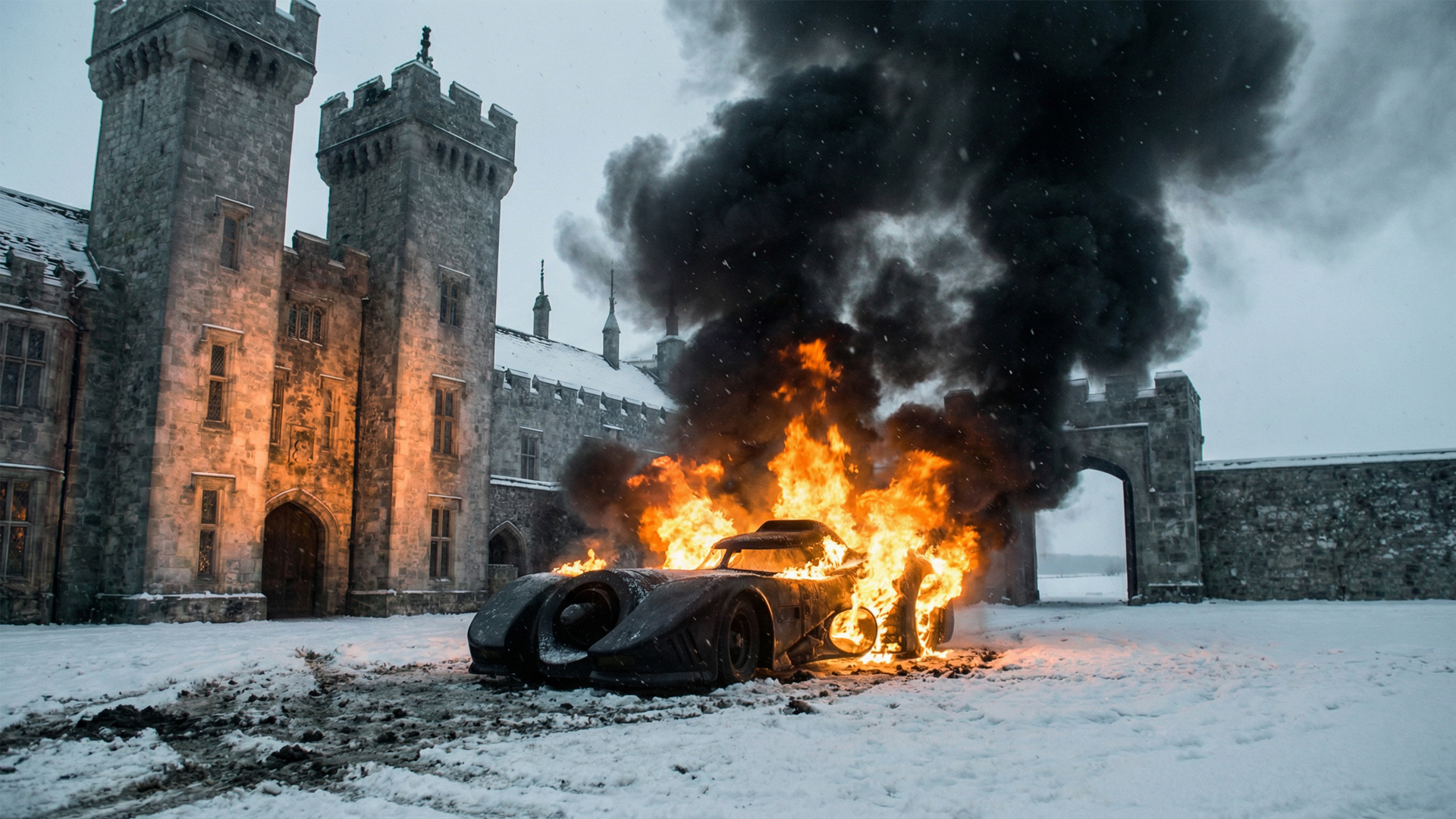
A human-led process beneath the finished short
Visual development
Atmosphere before explanation
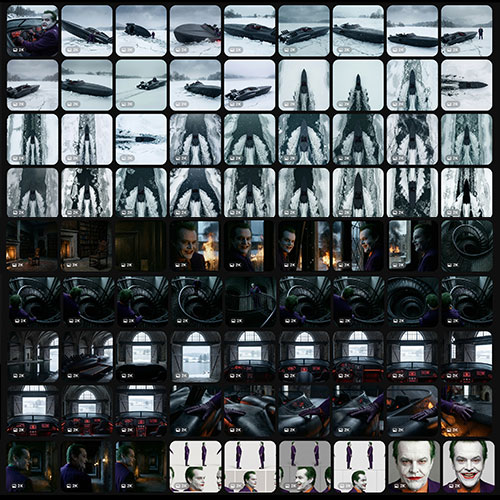
Generated frames were produced in large numbers, then selected, refined, and sequenced to establish a consistent tone, with particular attention to silhouette, light, continuity, and whether each shot felt like part of the same world rather than a disconnected image.
The batboat
Designing the batboat as an asset
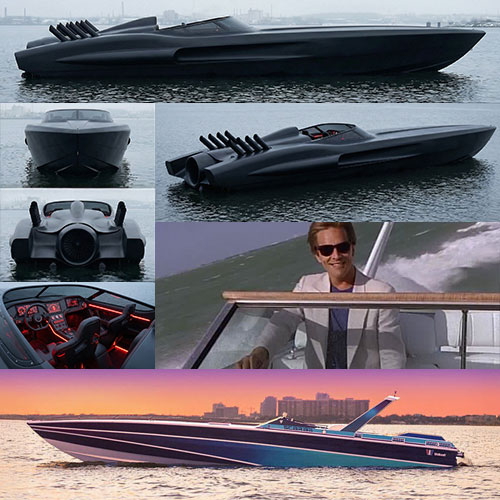
One of the most deliberate parts of the process was the batboat, which was treated almost like a repeatable character rather than a throwaway prompt. Its design was loosely sparked by Sonny Crockett's Wellcraft Scarab from 1980s Miami Vice, then pushed toward a darker, more exaggerated Batman version. Contact sheets featuring the interior and exterior from multiple angles helped keep it consistent across scenes and gave the film one of its clearest visual anchors.
Edit and structure
Pacing, tension, and silence
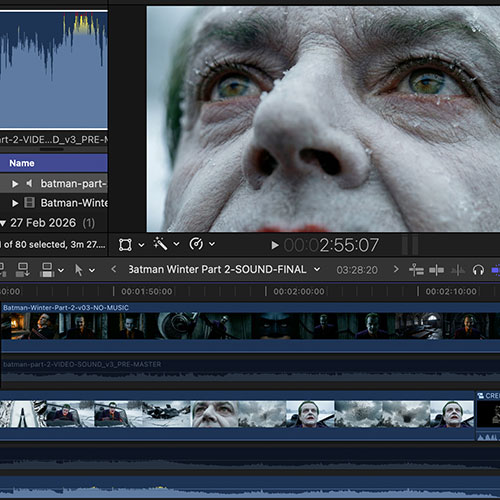
The final shape of the film came through sequencing, pacing, shot order, and restraint. Silence was used deliberately, not as an absence, but as a way to let tension build and give the images, music, and transitions more weight.
Music and sound
Sound carrying the structure
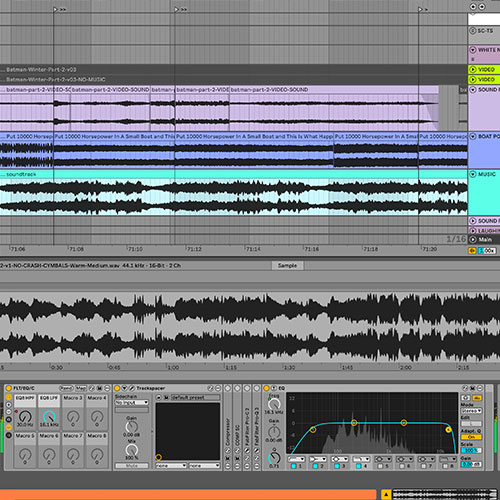
Original music and sound design were not added at the end as support. They helped shape the direction of the piece from early on, guiding rhythm, mood, and progression. Leaning away from dialogue was partly a response to current lip-sync limits, but also a creative choice: to use score, sound, and visual tension as the film's main emotional language.